
Thank you! 2026 goal acheived!
2026 Total raised
$102,000
OUR VISION
An informed public who would continue to support research initiatives in the treatment and conquest of prostate cancer.
OUR MISSION
An informed public who would continue to support research initiatives in the treatment and conquest of prostate cancer.
EVENT DETAILS
DATE
Sunday, June 21, 2026
Add event to calendar


LOCATION
Springbank Gardens, or virtual in your own neighbourhood!
DISTANCE
5 km | 2.5 km | 1 km
100m Tot Run
Run, walk, cycle, or dance your way to the KM of your choice!
YOUR fundraising at work
THE FUTURE OF TARGETED BIOPSIES ExactVu™ Micro-Ultrasound System
Mirco-Ultrasound Technology
The ExactVu MicroUltrasound device is a Canadian-developed technology that uses high-frequency ultrasound (~29 MHz versus normal ultrasound that uses ~7MHz) to image the prostate. The probe is inserted into the rectum, just like standard prostate ultrasound. The imaging is much higher resolution than normal prostate ultrasound and therefore can be used to see prostate cancers that we cannot see with regular ultrasound. Ideally, we would get an MRI and all men before biopsy to find all the prostate cancers and know where to biopsy, but our wait times are 3-6 months long.
Microultrasound can replace MRI in many cases. Its image quality is pretty close to MRI, which will allow for more accurate biopsies. Microultrasound can also be used in conjunction with MRI in men who have managed to get one. The MRI and ultrasound images can be fused so that targeted prostate biopsies can be performed.
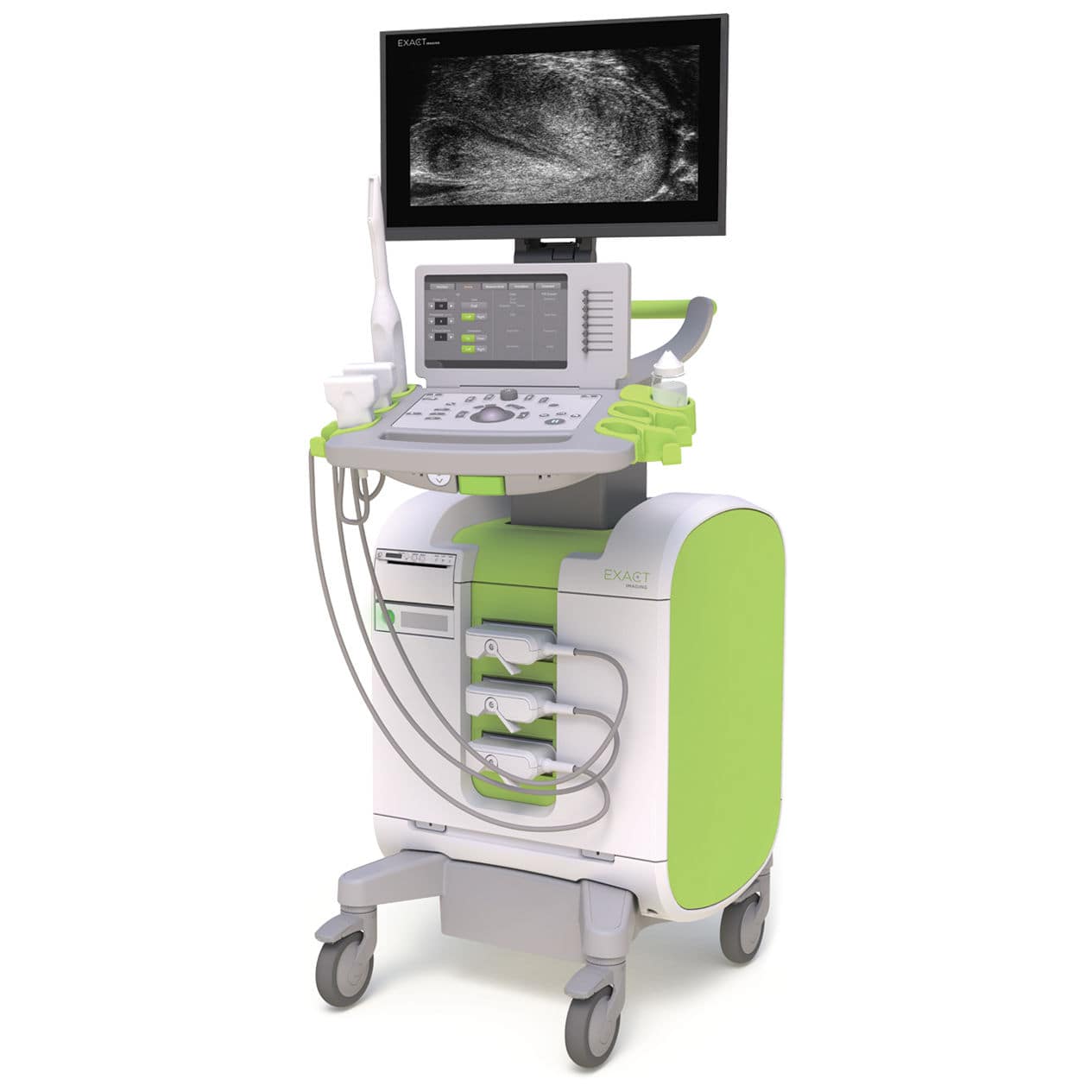
Benefits in Summary:
- Higher resolution ultrasound images of the prostate that allows for:
- Tumor identification by ultrasound where it was not possible with regular ultrasound
- Targeting of lesions that are outside of our normal biopsy templates
- Standardized prostate cancer risk assessment rating scale, called PRIMUS, which is similar to the PIRADS scale used in MRI
- Avoidance of MRI for many men
- Can be used for transperineal biopsies (not currently offered here)
- Can be used for MRI-US fusion biopsies, with FUSIONVu system
CHIN-HARDIE CHAIR WELCOMES Dr. Brant Inman
What is the chin-hardie chair?
The Chin-Hardie Chair in Urologic Oncology will transform how cancers of the urinary tract and the male reproductive system are diagnosed and treated. Funds raised for this position empower the division to challenge traditional approaches and drive change.
National Impact
With around only 20 Urologic Chairs in Canada, the Chin-Hardie Chair positions London Health Sciences Centre (LHSC) at the forefront of urologic cancer research. This role ultimately helps foster collaborations with other leading institutions.
Who is Dr. Brant Inman?
Dr. Brant Inman was recruited as the inaugural Chin-Hardie Chair in September 2023 for a term of five years. He is a renowned specialist in prostate, bladder, and kidney cancers, bringing years of experience to LHSC.
He is an expert in various surgical techniques, from robotic and laparoscopic to open surgery. His role as the Chin-Hardie Chair enables him to lead groundbreaking research, transforming cancer care for patients in London and beyond.
Progress to date
In the first year of Dr. Inman’s five-year term, significant strides have already been made:
- More Research and Enhancements – Dr. Inman’s team has hired additional staff and restructured their research capacity.
- New Treatment Trials – Several clinical trials are underway, testing advanced therapies that could bring better outcomes to patients facing bleak diagnoses.
What's Next?
- Biobanking: London Urology BioSolutions Repository – Building a repository of patient samples to help with current and future research initiatives.
- New Clinical Trials – Launching large-scale studies will bring more options to patients.
- Translational Science – Quickly translating lab findings to the clinic to help patients faster.
- Collaboration – Building and improving connections with local teams and industry collaborators to drive innovation in patient treatment.